The Game of Inventing
Few games have stood the test of time quite like Scrabble. Found in homes, classrooms, and competitions around the world, Scrabble is more than just a board game. It is a story of invention, persistence, and reinvention.
At its core, Scrabble reflects the same journey every great idea takes. It begins with a spark, evolves through challenges, and adapts to stay relevant.
Inventing Scrabble
 Scrabble was invented by Alfred Mosher Butts during the Great Depression in the 1930s. An out of work architect, Butts set out to create a game that blended vocabulary skill with the element of chance.
His approach was methodical. He analyzed newspapers to calculate how frequently each letter appeared in everyday language. This data driven insight became the foundation for the letter distribution and point values still used in Scrabble today.
His first version of the game was called Lexiko, later evolving into Criss Cross Words. Despite its ingenuity, the game struggled to gain traction. Like many inventors, Butts faced years of rejection before his idea found its moment.
From Struggle to Breakthrough
The turning point came when James Brunot discovered Butts’ game in the 1940s. Brunot saw its potential and licensed the rights, making key refinements including the name Scrabble.
He also streamlined production and began manufacturing the game himself. What started as a small operation soon grew into a surge of popularity, especially after a Macy’s executive reportedly discovered the game and helped bring it into mainstream retail.
By the 1950s, Scrabble had become a household name.
Reinventing a Classic
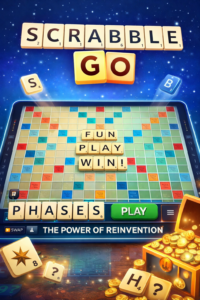
What makes Scrabble truly remarkable is not just how it was invented, but how it has continually reinvented itself.
Over the decades, Scrabble has adapted to changing times:
- Deluxe editions with rotating boards and upgraded design
- International versions supporting multiple languages
- Competitive tournaments, including the World Scrabble Championship
- Digital transformations through mobile apps and online gameplay
Each evolution has kept the game fresh while preserving its original essence.
This ability to adapt is what separates a one time idea from a lasting success.
What Scrabble Teaches About Innovation
The story of Scrabble mirrors the journey of countless successful inventions.
It started with a simple concept.
It faced early rejection.
It evolved to stay relevant across generations.
Innovation is not just about the initial idea. It is about how that idea grows, improves, and adapts over time.
From Then to Now
Today, Scrabble remains one of the most beloved games in the world. From living room tables to smartphone screens, it continues to connect people through creativity and competition.
And its journey is far from over.
Have An Idea? Wondering What’s Next?
Having a product or app idea is a very exciting time. Knowing what to do next is where some ideas began to fall by the wayside. Having a clear method or journey to follow that places idea confidentiality at the forefront when bringing an idea to the real world is vital. This is one reason Davison invented the 9-Step Inventing Method.