Every great product starts with an idea.
But where does that first spark of inspiration come from?
Look around your home, office, or even your car. Nearly everything you see began as someone’s idea. From simple kitchen utensils to innovative household products, many of the items we use every day exist because someone imagined a different way of doing something.
But here’s something many aspiring inventors don’t realize: You don’t have to be an engineer, scientist, or professional designer to come up with a product idea.
Sometimes, inspiration comes from a frustrating experience. Other times, it comes from observing someone else’s challenges, enjoying a favorite hobby, or recognizing an opportunity to improve an existing product.
At Davison Design & Development, we’ve worked with inventors whose ideas began in many different ways. Their stories demonstrate how ordinary experiences can inspire creative solutions.
Let’s explore where great product ideas come from and meet some Davison inventors whose everyday observations inspired invention concepts.
1. Everyday Frustrations: When Something Just Doesn’t Work
Have you ever struggled to open a package, organize a cluttered drawer, or use a product that seemed unnecessarily complicated?
Those little frustrations might seem insignificant, but they can be powerful sources of inspiration.
Think about how often people encounter situations where something is difficult, inconvenient, or time-consuming. Each experience creates an opportunity to ask whether a better solution might be possible.
Inventor Spotlight: George Davison — BagStor®
Explore George Davison’s BagStor® Case Study
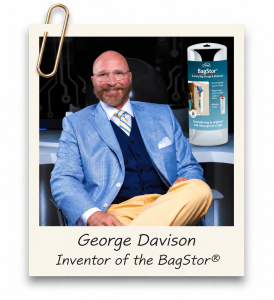
Sometimes, inspiration comes from something as simple as a pile of plastic grocery bags. Davison founder George Davison recognized the inconvenience of storing and organizing plastic grocery bags for reuse. Rather than accepting the clutter, he envisioned a product that could make storing and accessing those bags easier.
That idea led to BagStor®, a product designed to help consumers conveniently organize plastic grocery bags.
George’s experience demonstrates that invention ideas don’t always begin with complicated problems. Sometimes, recognizing a small everyday inconvenience is enough to inspire a new product concept.
The takeaway: The next time something frustrates you, don’t just work around it. Ask yourself what could make the experience better.
2. Personal Experiences: Solving Problems You’ve Faced Yourself
Some of the most interesting invention ideas come from experiences that are deeply personal.
A parent may imagine a better way to organize children’s belongings. A pet owner might envision a product that makes caring for an animal easier. Someone who frequently uses a particular tool may recognize an opportunity to improve its convenience or accessibility.
Because these individuals experience the challenges firsthand, they may notice details that others overlook.
Inventor Spotlight: Angelica — Quick Cut
Explore Angelica’s Quick Cut Case Study
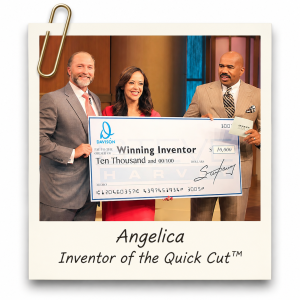
Angelica experienced a familiar household frustration: needing scissors but not being able to find them when she needed them.
Instead of continuing to search for misplaced scissors, she imagined a small cutting tool that could be conveniently positioned in locations where it would be useful.
Her idea became Quick Cut, a compact cutting accessory designed to provide convenient access to a cutting tool.
What started as a simple personal inconvenience inspired a product concept intended to address a problem other consumers might recognize.
The takeaway: Your own experiences can be a valuable source of invention inspiration. Pay attention to the challenges you repeatedly encounter.
3. Recognizing the Needs of Others: When Someone Else’s Challenge Inspires an Idea
You don’t have to experience a problem personally to recognize an opportunity for innovation.
Sometimes, inspiration comes from watching someone else struggle with an everyday task or recognizing how a particular challenge affects their quality of life.
Perhaps you’ve watched a family member struggle with a physically demanding activity, seen a coworker repeatedly adjust an uncomfortable tool, or noticed someone improvising a temporary solution.
These observations can reveal opportunities to develop products that address practical needs.
And sometimes, the people closest to us play an important role in encouraging an idea to move forward.
Inventor Spotlight: Robert — Hot/Cold Therapy Brace
Explore Robert’s Hot/Cold Therapy Brace Case Study

As a plumber, Robert experienced significant wrist pain while installing pipes. The discomfort began affecting his ability to perform his work, creating a need for a solution that could provide both support and relief.
Recognizing the challenges Robert was facing, his wife helped him take the next step by connecting with Davison Design & Development.
Robert’s idea was a wearable wrist brace that could provide both hot and cold therapy.
Working with Davison, his concept was developed into the Hot/Cold Therapy Brace, which was ultimately licensed to a company in the medical and healthcare industry.
Robert’s story demonstrates how personal challenges, combined with the support and encouragement of loved ones, can inspire ideas intended to improve everyday life.
The takeaway: Sometimes, recognizing the challenges faced by someone close to you can help inspire a meaningful product idea.
4. Improving Existing Products: Finding a Better Way
Not every new product idea requires inventing something that has never existed before.
Sometimes, innovation comes from looking at a familiar product and imagining how it could work differently.
Consider the evolution of everyday products such as water bottles, luggage, cleaning tools, and kitchen accessories. Over time, new designs and features have been introduced to address changing consumer preferences.
An improvement might focus on making something easier to use, more comfortable, more portable, or better suited to a particular situation.
Inventor Spotlight: Gary and Ruth — Twister Bolts
Explore Gary and Ruth’s Twister Bolts Case Study
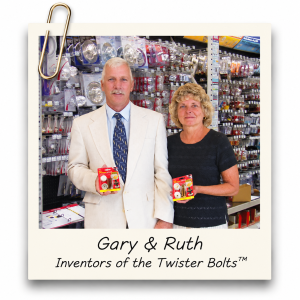
While preparing their home for a party, Gary and Ruth noticed something small but frustrating: a missing toilet bolt cap.
Although toilet bolt caps already existed, they recognized an opportunity to improve how the caps stayed in place.
Their observation inspired Twister Bolts, a product concept intended to provide a more secure solution for covering toilet bolts.
Rather than creating an entirely new product category, Gary and Ruth focused on improving an existing household item.
The takeaway: Look at the products you already use and ask, “What could make this work better?”
5. Hobbies and Family Activities: Turning Interests Into Inspiration
People often develop specialized knowledge through activities they enjoy.
Whether it’s cooking, fishing, golfing, gardening, exercising, or spending time outdoors, hobbies expose people to products and situations that others may know little about.
The more time you spend participating in an activity, the more likely you are to recognize opportunities for improvement or imagine something different.
Sometimes, inspiration comes from watching family members enjoy their favorite activities.
Inventor Spotlight: John — BikeBoard
Explore John’s BikeBoard Case Study
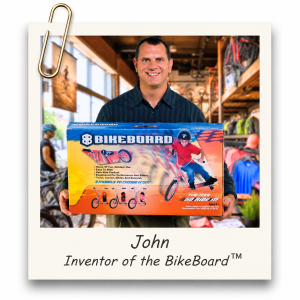
John enjoyed watching his children participate in activities such as biking, skating, and surfing.
Those experiences inspired him to imagine a new type of riding toy that combined elements of these activities into a different recreational experience.
His idea became BikeBoard, a product concept that brought together familiar recreational features in a new way.
John’s story shows how hobbies, family experiences, and creative thinking can inspire ideas that go beyond solving an obvious frustration.
The takeaway: Your hobbies and interests can provide valuable inspiration. Consider whether the activities you enjoy could benefit from a new product or a different approach.
6. Combining Existing Ideas: Creating Something Different
Sometimes, a product idea doesn’t begin with a completely new function. Instead, it comes from combining familiar features or concepts in a different way.
Think about products that perform multiple functions or bring together features traditionally found in separate items.
Combining existing ideas may create opportunities to improve convenience, simplify everyday tasks, or offer consumers a different experience.
For example, imagine combining a storage accessory with a carrying feature or incorporating an adjustable mechanism into a commonly used household product.
The challenge is determining whether the combination provides a meaningful benefit rather than simply adding unnecessary complexity.
The takeaway: Ask yourself whether two familiar products or functions could work together to solve a problem more conveniently.
7. Changing Lifestyles: Recognizing New Needs
The way people live, work, shop, and communicate continues to evolve.
As lifestyles change, so do the products people use and the challenges they encounter.
Consider how remote work, smaller living spaces, outdoor recreation, and connected technology have influenced the development of consumer products.
Changes in everyday behavior can create opportunities for products designed around emerging needs.
For example, someone working from a small home office may want equipment that’s easier to store when not in use. Families who frequently travel may appreciate products that offer greater portability or convenience.
Recognizing these changes can inspire ideas that address how people live today.
The takeaway: Pay attention to changing routines and consider whether existing products adequately support them.
8. Curiosity and Imagination: Asking “What If?”
Not every product idea begins with frustration.
Sometimes, inspiration comes from curiosity.
What if a familiar product could perform an additional function? What if an everyday task could be completed differently? What if a product could be redesigned for an entirely different environment?
These questions encourage creative thinking and can lead to unexpected concepts.
You don’t need to know exactly how an invention would work to begin exploring an idea. However, turning imagination into a practical product concept eventually requires research, design considerations, and an understanding of what may be technically possible.
The takeaway: Give yourself permission to think creatively. An unusual question could be the beginning of an interesting idea.
What Can We Learn From These Davison Inventors?
Although each inventor’s experience was different, their stories share an important theme: They recognized an opportunity and imagined a possible solution.
George Davison saw an opportunity to improve grocery bag storage. Angelica wanted a more convenient way to access a cutting tool. Robert’s experience with wrist pain inspired a product concept intended to provide support and therapeutic relief. Gary and Ruth recognized a limitation in an existing household product. John drew inspiration from activities his children enjoyed.
Their ideas came from different experiences, but each began with an observation.
These stories illustrate that inspiration can come from almost anywhere. However, developing an idea into a product involves additional steps, and not every invention concept will lead to a licensed product or commercial success.
How Do You Know If Your Product Idea Is Worth Exploring?
Coming up with an idea can be exciting, but identifying a potential solution is only the beginning.
Before moving forward, it’s helpful to consider a few important questions:
Exploring these questions can help you better understand your concept and identify areas that may require additional research.
- What problem does the idea address?
Clearly identify the need or inconvenience your concept is intended to solve. - Who might use the product?
Think about the people who could potentially benefit from your proposed solution. - Are similar products already available?
Research existing products to better understand the alternatives and how your idea might differ. - What makes your concept distinctive?
Consider whether your proposed features, design, or functionality offer a meaningful difference. - What would be involved in developing the idea?
Product design, materials, functionality, prototyping, and other considerations may influence the development process.
From Inspiration to Exploration: Taking the Next Step
An idea doesn’t have to begin as a detailed drawing or a fully developed technical concept.
Sometimes, it starts with a few notes, a rough sketch, or a simple explanation of something you’d like to improve.
If you have a product idea, consider writing down what inspired it, the problem it addresses, and how you envision it working.
You can also begin researching similar products and learning more about the invention development process.
Taking time to organize your thoughts can help you communicate your idea more clearly and better understand the questions that may need to be answered along the way.
Your Next Product Idea Could Be Closer Than You Think
Great product ideas don’t always come from extraordinary circumstances.
They can begin while preparing dinner, working in the yard, traveling, enjoying a hobby, or helping someone complete an everyday task.
As the experiences of these Davison inventors demonstrate, inspiration can come from everyday frustrations, personal experiences, and moments of curiosity.
The next time you catch yourself thinking, “Someone should invent something for that,” consider what a potential solution might look like.
After all, every invention begins somewhere.
And your next idea could begin today.
Have a Product Idea? Discover How Davison Can Help You Explore It.
For more than three decades, Davison Design & Development has worked with inventors to explore ideas and develop product concepts.
Through a structured invention development process, Davison offers services that may include preliminary research, product design, prototyping, packaging design, and presentation materials.
Whether your idea came from a personal experience, an everyday frustration, or a moment of inspiration, understanding the development process can help you decide what steps to consider next.
Have an idea you’d like to discuss?
Visit Davison.com to learn more about our invention development services and request a no-cost, confidential consultation.
The inventor stories featured are not paid actors, they are real Davison clients. This means the above illustrate individual experiences and are not representative of typical results.