The story behind Raymond’s Super Splitter and the product development process
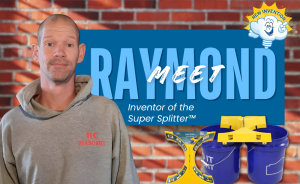
Mixing concrete or mortar often begins with a simple but physically demanding task: lifting a heavy bag, cutting it open, controlling the dust and directing the dry material into a mixing container. For masonry professionals, contractors and serious do-it-yourselfers, repeating that process can add strain, mess and lost time to an already demanding job.
Masonry professional Raymond saw an opportunity to approach the task differently. His idea became the Super Splitter™, a concrete bag splitter designed to use a built-in serrated blade and gravity to open a bag of dry material and direct the contents into two five-gallon buckets. The product development story shows how firsthand experience with an everyday problem can inspire a practical product solution.
The Everyday Challenge Behind the Idea
Anyone who has worked with bagged concrete, mortar or similar dry materials knows the routine. A bag must be moved into position, opened and emptied without losing control of the contents. Traditional methods may require a worker to balance the bag over a wheelbarrow or mixing area while using a utility knife or another cutting tool. The awkward posture, weight of the material and airborne dust can make the task uncomfortable and inefficient.
Raymond’s experience in masonry gave him a clear view of the problem. Rather than accepting the process as just another difficult part of the job, he began thinking about a hands-free concrete bag opening tool that could simplify the first step of mixing. His goal was to create a safer, faster and more controlled way to split a bag and collect the material.
How the Super Splitter Works
The Super Splitter is built around a straightforward principle: position the bag over a serrated blade and let the weight of the material help open it. As the bag separates, the dry contents are funneled into two five-gallon buckets below. This approach gives users an alternative to manually cutting and holding a heavy bag over a wheelbarrow or mixing container.
The concept brings several functions together in one product:
- A built-in serrated blade helps split the bag open.
- Gravity assists with opening and emptying the bag.
- The design directs material into two five-gallon buckets.
- The setup supports a more controlled, hands-free process.
The result is a focused solution for a familiar jobsite challenge. Instead of adding unnecessary complexity, the concept uses the bag’s own weight and a carefully arranged structure to change how the material is opened and collected.
Turning Jobsite Experience Into a Product Idea
Many product ideas begin with a moment of frustration, but moving from an observation to a developed product requires more than recognizing the problem. The inventor must define what the product should do, how people may use it and which design features are central to the solution.
For the Super Splitter, Raymond’s knowledge of masonry helped establish the core requirements. The product needed to accommodate a heavy bag of dry material, create a clean opening and direct the contents into common jobsite containers. Those requirements provided a practical foundation for the design and development work.
With assistance from Davison, Raymond’s initial idea was developed into a product design centered on the serrated splitting blade and two-bucket collection system. The process connected his real-world understanding of the task with product development expertise, helping translate the idea into a form that could be evaluated and refined.
From Product Development To Selling On The Marketplace
The Super Splitter later made its way to market and is available through Walmart, Jokari, Amazon and other retailers. Its path illustrates what can happen when an inventor starts with a clearly defined problem and remains focused on the function the product is intended to provide.
Readers can learn more about the product through Jokari or view its listing on Amazon.
What Other Inventors Can Learn From Raymond’s Story
The Super Splitter story offers a useful lesson for people exploring new product ideas: pay attention to tasks that repeatedly create strain, mess, wasted motion or unnecessary steps. A worthwhile product opportunity does not always begin with a complicated technology. Sometimes it begins with a better way to complete one specific task.
When evaluating an everyday problem, consider a few practical questions:
- Does the problem happen frequently enough to matter?
- Who experiences the problem, and under what conditions?
- Which part of the current process causes the most frustration or physical effort?
- Could a product reduce steps, improve control or make the task easier to manage?
- Can the idea be explained clearly through a simple before-and-after comparison?
Raymond started with a task he understood and a problem he had experienced directly. That connection helped him identify a focused goal for the product: create a smarter way to open and dispense bagged concrete or mortar.
Learn More About Raymond’s Story And How He Became An Inventor
See the Super Splitter’s journey at a glance. Access the Super Splitter Before, During and After to view Raymond’s product development story and the progression from problem to product.
Have an Idea for a Better Way
Everyday problems can be the starting point for those ah-ha moments that turn into product ideas become a product solution. Davison works with inventors to develop ideas into product concepts. Learn more about the invention development process and explore what the next step may look like for your idea.