Heading Toward Safety: The Evolution of the Football Helmet

Featured Invention, Product News

football inventionsAre you ready for some… protection?  With football season underway, let’s examine that ever-so-important piece of equipment players wear to protect themselves on the field… their helmets!

Previously stuffing thick rags under their hats, football players began sporting leather helmets in the 1940s.  But, as competitors began to run faster, throw farther and hit harder… they needed some sturdier dome protection.

High school football coach John Riddell is credited with inventing the first plastic helmet in 1939, although it was not widely accepted until the early ’50s.  Riddell’s plastic protector was lined with a web and an air cushion for added hit-absorption.  His helmet was such a success, he left coaching to pursue the manufacturing business; today, you can find Riddell’s name on 90% of NFL players’ heads!

About a decade after Riddell’s hard-headed invention, the National Operating Committee on Standards for Athletic Equipment deemed the “webbed” helmets unsafe and padding was incorporated into the design.  Further absorbing a lineman’s tough tackle, foam was added around the jaw and ears of helmet interiors.

product evolutionIn the 1970s, long before Reebok came out with their Pumps, the helmet was air-infused.  Because they had been “one size fits all,” some players’ heads were rattling around inside, while other players were cramped in their helmets.  With the added air-filled pads, players could pump or remove air from their helmets for a snug fit.

Further advancing the helmet’s protective capabilities, manufacturers have taken it to the next level.  The latest innovation to the protective headgear includes electronic devices with diagnostic capabilities.  These high-tech helmets can instantly read the length and severity of a hit… in some cases, before a player even notices an injury!

So, as you’re tuning in this weekend – look away from your fantasy football stats for a moment and take a look at the protective headgear your favorite players are sporting!

Information for this article, thanks to http://www.livestrong.com/article/341058-the-history-of-the-nfl-helmet/ and http://www.livestrong.com/article/351862-football-helmet-safety-improvements/.

Golf Inventions that Go the Distance!

Featured Invention, Inventor Stories

golf inventions

As summer winds down and temperatures begin to cool, we’d like to take a minute to recognize one of America’s favorite summer pastimes, the game of golf.  After all, August is National Golf Month, so why not take a minute to “drive” home a few of the game’s firsts?

We begin with the origin of the game itself, which actually was about as hard to track down as playing 18 holes on a PGA championship course!  However, it seems the modern version of the game began in 15th-century Scotland.   In fact, history shows the first written record of the game was actually a document outlawing it!

sports inventionsSo, what did 15th century golfers whack around?  Well, at first, pebbles (OUCH!).  Next up, were thin leather bags, stuffed with feathers – which made a hole in one impossible!  Finally, in 1858, Reverend Adam Paterson was credited with making a “gutta-percha” ball from tree sap that could fly about 225 yards.  Enhancing Paterson’s invention and the distance the ball would travel, Coburn Haskell introduced a rubber-cored ball in 1898 that soared to an impressive 430 yards.  The ball’s dimpled pattern was added in 1905 by William Taylor and well, that pretty much brings them up to modern speed!

The earliest golf clubs were wooden and are attributed to Scottish makers Tom Morris and Willie Park.  Just before the 20th century, Thomas Horsburgh, a blacksmith, began experimenting with steel-shafted clubs.  After that, club-makers used graphite and titanium to craft clubs.

inventions for golfWhile we’re not too sure how golfers originally toted their clubs around, golf bags came into use in the 1880s and Merlin Halvorson is credited with inventing the first cart in 1962.

Last, but not least, as we certainly wouldn’t want to “tee” anyone off, in 1889, Scottish golfers William Bloxsom and Arthur Douglas patented the first portable golf tee.  Percy Ellis was granted a Brittish patent just three years later for his “Perfectum” tee, made of rubber and metal.  The cup-shape was added to the top of the tee and patented by PM Matthews in 1897.  Americans Prosper Senat and George Grant also received patents for various tee improvements.

If your weekend round is rained out, learn more about the history of golf and other inventors who helped improve the tools of the trade at http://www.golf-club-revue.com/golf-club-history.html and http://inventors.about.com/od/gstartinventions/a/golf.htm.

Sticks and Stones May…Fight Plaque?!

Community News, Featured Invention

toothbrush invention Ok, so, it might be a stretch to believe a tree branch could help fight cavities, but history shows ancient civilizations (we’re talking 3,000 BC!) may have used a “chew stick,” or thin twig with a frayed end, to clean their teeth. 

And, chew sticks must have worked fairly well, as the bristle toothbrush, similar to what we use today, did not come along until June 26, 1498, when a Chinese inventor attached coarse hog hair to bone and bamboo handles.  An Englishman, William Addis, is credited with first mass-producing the toothbrush around 1780. 

Although, we think we’d prefer the “twig” model, boar bristles were actually used until 1938.  At that time, a French company, Dupont de Nemours, introduced “Doctor West’s Miracle Toothbrush,” which utilized nylon bristles. 

What may be even harder to believe than using tree branches and hogs hair to promote dental hygiene, is that although American, H. N. Wadsworth, patented a toothbrush in 1857 and American companies began mass-producing toothbrushes around 1885, many Americans didn’t use them until influenced by the increased hygiene habits World War II soldiers brought back from the battlefield!

evolution of inventionSwiss inventors introduced the first electric toothbrush in 1939; an American company, Squibb, marketed their electric Broxodent in 1960; quickly following, General Electric introduced a rechargeable cordless toothbrush in 1961.  Finally, in 1987, Interplak, an electric rotary-action toothbrush, was marketed for home use. 

Although it may have taken a while to catch on, most Americans agree, the toothbrush is one invention they cannot live without!  To find out why many Americans said they would rather part with their cars, computers and cell phones than with their trusty toothbrush, click here!

National Telephone Day — Evolution of the Phone

Featured Invention, Inventor Stories

evolution of phones

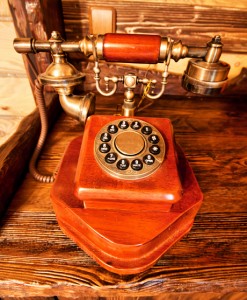
While most of us are familiar with recent developments in the telephone industry, and may even carry the latest iPhone, Droid or Blackberry models, it is likely that few may know where these gadgets got their roots and just how far they’ve come through the years.

Over a century ago, in 1876, Alexander Graham Bell uttered the first words over what he called his “electrical speech machine.” Those words, “Mr. Watson, come here, I want you,” traveled only to his assistant who was working in the next room, but now resonate world-wide. Today, deemed National Telephone Day, we pause, if only momentarily, from sending those texts, updating our social media statuses or just checking news headlines, to recognize Bell’s legendary invention and how, with the help of many other inventors along the way, it has become so “smart!”

telephone inventionAs the world reveled at the telephone’s initial capabilities, Bell went to work on several other inventions, including a flying machine and metal detector, to name just a couple. However, it didn’t take long for his electrical speech machine to evolve. Ten years after Bell patented his telephone, the first long-distance line was installed – it ran from New York to Philadelphia! Quickly following, William Gray invented the first pay phone, which was also installed in the U.S. Northeast.

phone inventions

While it may not be considered the first “picture message,” the first photograph was electronically transmitted in 1921. Bell’s invention went world-wide in 1935 when the first international call was placed. Mobile telephone service can be traced back to 1946, and originally linked vehicles to telephone networks through their radios; however, Martin Cooper, a British inventor, is credited with designing the first mobile phone in the 1970s. Caller ID originated in the 1980s, when faxing also gained popularity.

Advancing and evolving the mobile phone industry, 2G, or “second generation” service was introduced in the 1990s and allowed users to send SMS communications or text messages. The 2000s ushered in 3G service and, with that, the mobile internet craze. Today, 4G networks allow users to enjoy their fastest service yet.

modern technology

So, over a century later and with the help of many talented inventors along the way, what’s next for Bell’s electrical speech machine? To 5G and beyond!


Welcome to the Davison Blog. We're a company of over 250 employees dedicated to putting more products on store shelves then any company in history. Here we'll feature Product, Innovation and Inventor News along with inventing advice. Thanks for Visiting!
Get Started Today - Sign-up for a free consultation Go to Davison's Flickr Page Download Davison's Ringtone

Get our blog posts via email:

Delivered by FeedBurner

Search our blog

Featured Categories

Archives

Subscribe